How to Get Back Into Working Out After a Long Break
There is a particular kind of hesitation that comes with returning to exercise. You remember what you used to do, but you are not sure what you can do now. Your old workout plan might feel too demanding. Even packing your gym bag can turn into something you keep putting off.
Maybe work became busy. Maybe you were exhausted, lost interest, or needed time away. Whatever interrupted your routine, you do not have to make up for every missed session before you can begin again.
Getting back into working out after a long break starts with choosing something manageable for the body and the life you have today. Here is how to make that first week feel less overwhelming—and build from there.
1. Let Your Current Starting Point Set the Pace
Your previous routine can give you ideas, but it does not need to set the standard for your first workout back.
If you once trained four times a week, you can return with one or two sessions. If you used to lift heavier weights, choose a lighter load while you get comfortable with the movements again. If a long workout feels unrealistic, begin with a short one.
Before making a plan, ask yourself:
● What movement feels approachable right now?
● How much time can I realistically give it this week?
● What would make the first session easier to start?
You are gathering information about your current capacity. A lighter session can help you decide what to do next without turning the first day into a test of your old fitness.
If your break involved an injury, surgery, pregnancy or childbirth, or a health condition, follow the return-to-exercise guidance that applies to your situation. The example below is a general starting point for otherwise healthy adults, rather than a rehabilitation plan.
2. Give Your First Week One Clear Job
For the first week, make the goal simple: complete a manageable amount of movement and notice how you feel afterward.
You might choose one short strength workout and a few walks. If you feel ready for more, two short strength sessions on separate days can be another option. Leave room to adjust instead of filling every day with a commitment.
Public-health guidelines recommend at least 150 minutes of moderate-intensity aerobic activity per week, plus muscle-strengthening activity on at least two days. Those are targets to build toward; your first week back can be smaller. The guidelines also emphasize that some activity is better than none and that inactive adults should increase activity gradually.
For now, write down a specific action:
“On Tuesday after breakfast, I will do a short workout at home.”
That gives you a starting point you can act on. “I need to get fit again” leaves much more to decide.
3. Choose Familiar, Straightforward Movements
Returning to exercise does not require a completely new program. Start with movements you understand, in a setting where you feel comfortable.
At home, that might mean chair squats, wall push-ups, a resistance-band row, and a simple core exercise. At the gym, familiar machines can make it easier to settle back in. Walking or easy cycling can be a useful way to reintroduce aerobic activity.
Choose a small number of exercises and keep them similar across your first few sessions. Repetition makes it easier to judge whether the movements, resistance, and overall workload suit you.
If you feel uncertain about an exercise, ask a qualified trainer to help you with the setup and technique. You can also choose a simpler variation while you learn.
4. Try This Simple First Workout Back
This is an example of a gentle introductory strength session. Adapt it to your ability and available equipment; you do not need to complete every exercise to have a useful first session.
Start with an easy warm-up
Spend around five minutes walking, cycling gently, or moving comfortably. Then practise a few easy repetitions of the exercises you plan to use.
Keep the exercise list short
Starting option :
- Chair squat 1 set of 6–10 controlled repetitions
- Wall or high-counter push-up 1 set of 6–10 controlled repetitions
- Light resistance-band cable row. 1 set of 8–10 controlled repetitions
- Glute bridge 1 set of 8–10 controlled repetitions
- Dead bug 1 set of 4–6 controlled repetitions
Use a sturdy chair or counter where needed. For band rows, use a secure anchor designed for the exercise and check the band for damage before starting.
Rest between exercises until you feel ready to continue—around one to two minutes can be a starting point. Choose variations and resistance that let you finish with controlled technique and several repetitions still possible. There is no need to train to exhaustion on your first day back.
One round may be enough. If it feels comfortable, you can consider a second round, but you can also save that increase for a later session. Allow roughly 15–25 minutes, with extra time whenever you need it.
Finish and check in
Walk slowly for a few minutes if that feels comfortable. Later that day and the following day, notice your energy, soreness, and how ordinary activities feel. That feedback helps you decide whether to repeat, reduce, or gradually increase the next session.
5. Make Space for Recovery
Place a rest day or an easier movement day between your first strength sessions. Recovery belongs in the plan from the beginning.
Here is one possible first week:
Example plan
- Monday A comfortable 10–15-minute walk
- Tuesday Short introductory strength workout
- Wednesday Rest or easy movement
- Thursday Another comfortable walk
- Friday Repeat the strength workout if you feel recovered
- Saturday Optional enjoyable movement, such as a relaxed walk
- Sunday Rest and choose next week’s workout times
Move these days around your schedule. If you work shifts, plan around your actual sleep and energy rather than forcing the same weekday pattern every week.
Mild muscle soreness can happen after unfamiliar exercise, but soreness is not a goal or a requirement for progress. If it makes normal movement difficult, give yourself more recovery and reduce the next session. Stop an exercise that causes sharp pain or joint pain, and seek appropriate advice if pain persists.
6. Increase One Thing at a Time
When your sessions feel manageable and you recover comfortably, choose one small progression.
You could add a repetition to an exercise, use slightly more resistance, add a set to one movement, or extend a walk by a few minutes. Keep the other parts of the routine steady while you see how that change feels.
There is no deadline for returning to your previous weights or workout length. Repeat the same workload for longer when you need to. Your progress can also show up as steadier technique, greater confidence, or less hesitation before a session.
7. Prepare for the Days When Motivation Is Low
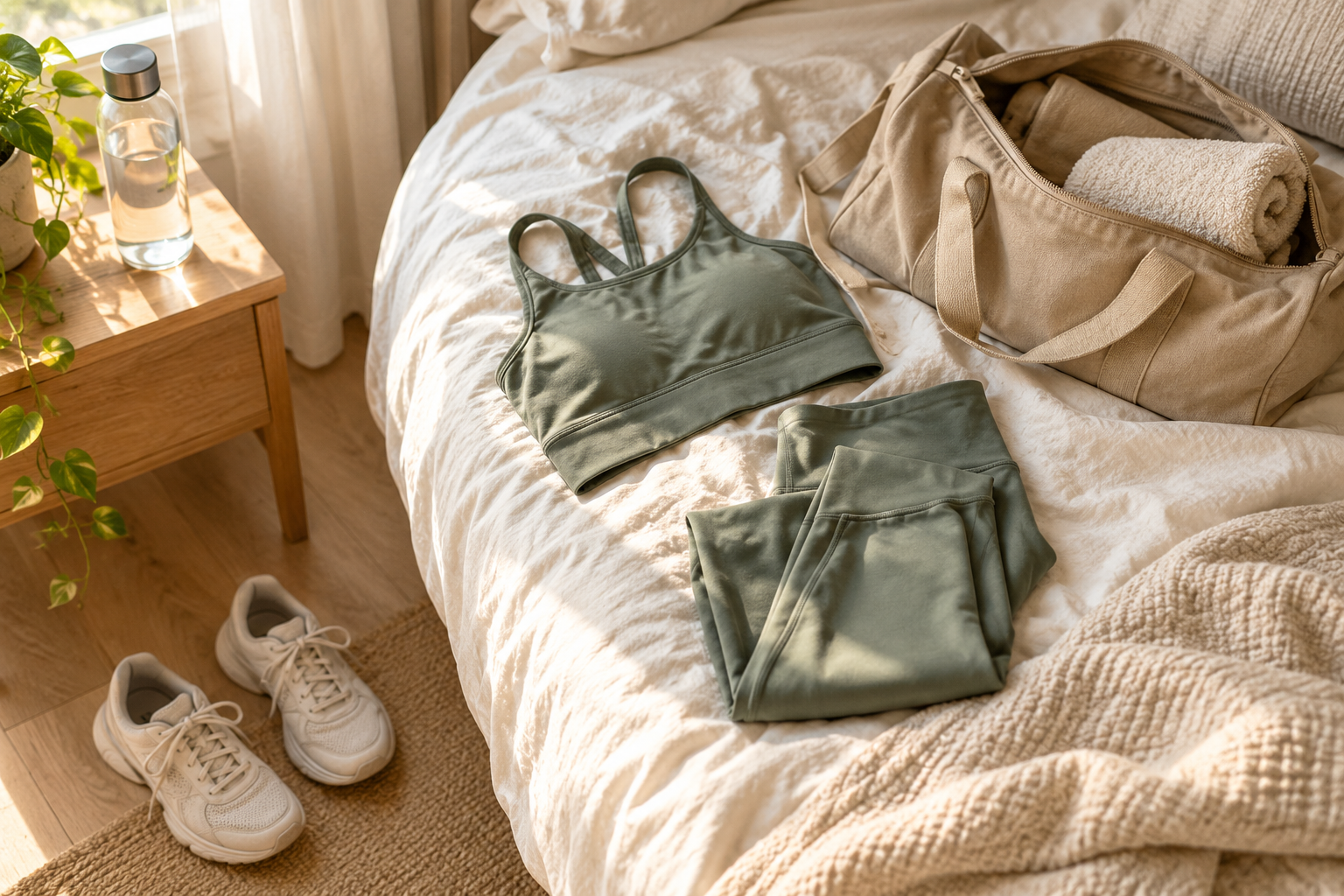
Make starting easier before the workout arrives. Put your clothes out, pack your gym bag, and decide which exercises you will do. If possible, choose a time that does not depend on having energy left at the end of a demanding day.
It can help to have two versions of your plan:
● Your regular session: the short workout you have scheduled.
● Your smaller option: a few comfortable movements or a brief walk when time or energy is limited.
Use the smaller option when it suits you. If you are unwell or need rest, adjust the plan accordingly.
If you miss a workout, return at the next suitable opportunity. You do not need to double the next session or squeeze every missed exercise into the weekend.
Common Mistakes When Returning to Exercise
Starting with your old workload. Let your current technique, effort, and recovery guide the session.
Changing everything at once. Establish a manageable training rhythm before adding more demands to your week.
Treating each workout as a test. Record what you did, but give yourself room to practise and rebuild.
Expecting every week to look identical. A routine that accommodates busy days is easier to return to when life changes.
Your Next Step
Choose one movement session, decide when it will happen, and prepare what you need. Keep it small enough that you can picture yourself doing it this week.
You can build a fuller routine as your capacity and confidence grow. For today, a clear, manageable first step is enough.
Sources
● CDC: Adult Activity—An Overview
● Physical Activity Guidelines for Americans, Second Edition