How to Start Strength Training as a Woman: A Beginner’s Guide
Starting strength training can feel confusing when you are a beginner. You might walk into the gym, see rows of machines and weights and have no idea where to start — or worry that you are doing everything wrong.
The good news is that strength training does not need to be complicated. You do not need an advanced workout split, endless exercises or years of experience to begin building strength.
This beginner’s guide will help you understand the basics of strength training, choose a simple approach and start with more confidence.
What Strength Training Actually Means
Strength training is any type of exercise that challenges your muscles against resistance. That resistance can come from dumbbells, machines, resistance bands or even your own body weight.
The goal is not simply to lift the heaviest weight possible. As a beginner, strength training is about learning movement patterns, building control and gradually challenging your muscles as you become stronger.
Why Strength Training Can Be So Valuable for Women
Strength training can support muscle strength, physical function and overall fitness. It can also help you become more capable in everyday movements — from carrying groceries to climbing stairs or simply feeling stronger in your body.
Your reasons for starting can be completely personal. You might want to build muscle, improve your fitness, feel more confident in the gym or create a routine that supports your long-term health. You do not need the perfect goal before you begin.
How to Start Strength Training as a Complete Beginner
1. Start With a Simple Full-Body Routine
As a beginner, you do not need a complicated five-day workout split. A simple full-body routine can help you practice the basic movements regularly without needing to learn dozens of exercises at once.
Choose a small number of exercises that train the major areas of your body. Squat-based movements, pushing exercises, pulling exercises and simple hip-focused movements can create a strong foundation.
2. Learn the Movement Before Chasing More Weight
Give yourself time to learn how an exercise feels before focusing on lifting heavier. Start with a weight that allows you to move with control and complete your repetitions with consistent technique.
You can increase the challenge gradually as the movement becomes more familiar. Progress does not need to happen every workout — especially while you are still learning.
3. Focus on a Few Basic Movement Patterns
Instead of trying every machine in the gym, focus on learning a few basic movement patterns. Squatting, pushing, pulling and hip-focused movements appear in many strength exercises and can help you build a simple foundation.
You do not need to master every variation. Choose exercises that feel manageable, learn how to perform them with control and repeat them regularly enough to become familiar.
4. Give Your Body Time to Recover
More training is not always better, especially when you are just starting. Your body needs time between strength workouts to recover and adapt to the new challenge.
A few well-planned workouts each week can be enough to build a consistent routine. Pay attention to how your body feels and allow yourself to rest when you need it.
5. Track Simple Signs of Progress
Progress is not only about the number on the scale or how much weight you can lift. You might notice that an exercise feels more controlled, you can complete another repetition or a weight that once felt difficult becomes easier.
Keep a simple note of the exercises, weights and repetitions you complete. Looking back at your training can help you recognize progress that is easy to miss from one workout to the next.
What Should a Beginner Strength Workout Look Like?
A beginner strength workout does not need to include ten different exercises. A simple session can focus on a few movements that train the major areas of your body and give you enough time to practice each exercise with control.
For example, your workout might include a squat-based exercise, a hip-focused movement, one pushing exercise, one pulling exercise and a simple core exercise. The exact exercises can change depending on whether you train at home or in a gym.
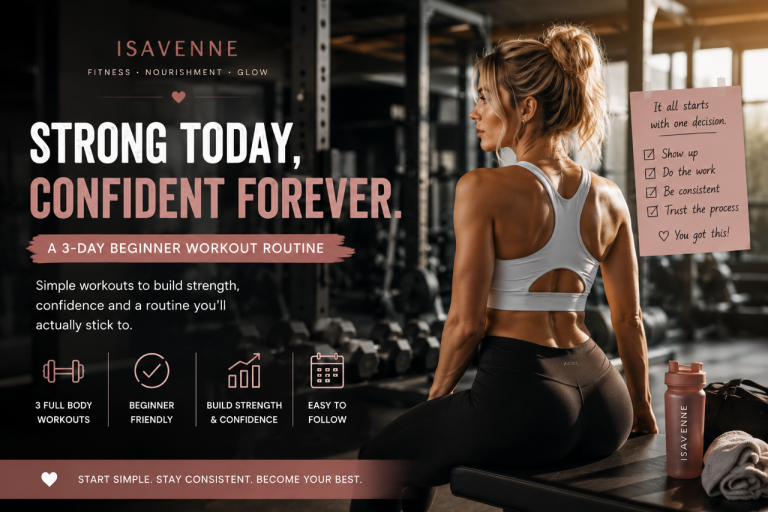
If you want a simple plan to follow, start with our 3-Day Beginner Workout Routine designed for women who are new to strength training and do not know where to begin.
Common Beginner Strength Training Mistakes
Changing Your Exercises Too Often
Trying new exercises can be fun, but constantly changing your entire workout can make it difficult to see whether you are actually improving. Repeating a small group of exercises for a while gives you time to become more familiar with the movements and notice changes in your strength and control.
Treating Every Workout Like a Test
You do not need to prove how strong you are every time you train. Constantly chasing your heaviest possible weight or pushing every set to complete exhaustion can make your workouts harder to recover from and leave less room to focus on good, consistent training.
Comparing Your Starting Point to Someone Else’s Progress
The person training next to you may have months or years of experience you cannot see. Their weights, exercises and training routine do not need to become your standard. Focus on building from your own starting point and learning what progress looks like for you.
Ignoring the Difference Between Discomfort and Pain
Strength training can feel challenging, and working muscles may burn or become tired during an exercise. Sharp, sudden or unusual pain is different and should not simply be pushed through. Learning to pay attention to these signals is an important part of training responsibly.
Forgetting That Your Training Needs to Evolve
Following the same routine can help you build confidence and improve your technique, but your workouts should not remain completely unchanged forever. As exercises become easier, you may need to gradually increase the challenge through more repetitions, additional weight or a more difficult variation.
The goal is not to change everything at once. Small adjustments over time can help your training continue to challenge you as you become stronger.
What to Expect During Your First Weeks of Strength Training
Your first few weeks of strength training are mostly about learning. Exercises may feel unfamiliar, you might need time to adjust equipment and some workouts will feel more comfortable than others.
Instead of expecting dramatic changes immediately, pay attention to the small signs that training is becoming more familiar. You may remember how to set up a machine without checking twice, feel more controlled during an exercise or notice that you need less time to decide what to do next.
These small changes matter. Strength training often becomes easier to enjoy when the gym and the movements stop feeling completely new.
You Do Not Need to Know Everything Before You Start
Strength training can feel complicated when you are looking at it from the outside. But you do not need to understand every exercise, machine or training method before you begin. Start with a simple approach, learn a few movements and give yourself time to become more familiar with the process.
Your training can become more detailed as your experience grows. For now, focus on building a foundation you understand and can continue developing over time.
Start where you are, learn as you go and let strength be something you build one workout at a time.